
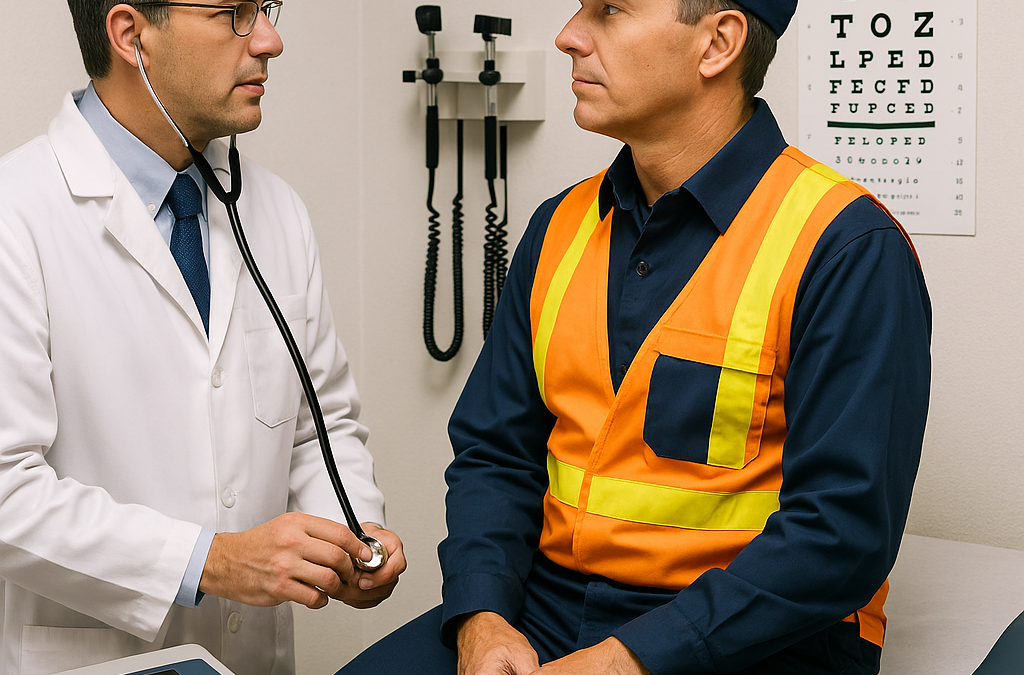
If you are preparing for your train driver medical, you might be wondering what will happen on the day and whether your health condition could affect your job. The good news is that the medical is designed to support your safety and wellbeing, not to catch you out.
During the appointment you will be asked about your medical history before undergoing several checks. These include measurements such as height, weight and blood pressure, a urine test, and a full examination of your heart, lungs, nerves and abdomen. Your hearing and eyesight will also be tested. If you drive trains, you will need an ECG as part of the assessment. If you work trackside but do not drive, an ECG may not be required.
Many people worry about whether they can still do the job if they have asthma, diabetes or high blood pressure. In most cases you can, provided your condition is well controlled. The doctor will look at how stable your symptoms are, what medication you use and whether it affects your ability to work safely. Even after a heart attack or joint replacement, many people return to duty once they have recovered and completed the necessary checks.
To make the process easier, bring photo ID, your glasses or contact lenses, your latest eye prescription, a list of all medicines you take and any recent letters from your GP or specialist. These help the doctor understand your health fully and complete your assessment smoothly.
Your medical will take place at Occupational Health Bristol. If extra tests are needed, such as a chest X ray or a heart exercise test, you will normally be referred through your employer.
The medical is part of keeping you and others safe. Preparing well and managing your health conditions gives you the best chance of a straightforward assessment and a confident return to work.